As an affiliate, I earn from qualifying purchases, but this doesn't affect the reviews or recommendations—your trust is important to me!
Perseid Meteor Shower: Photograph Shooting Stars No Telescope Needed
Perseid Meteor Shower: Photograph Shooting Stars No Telescope Needed
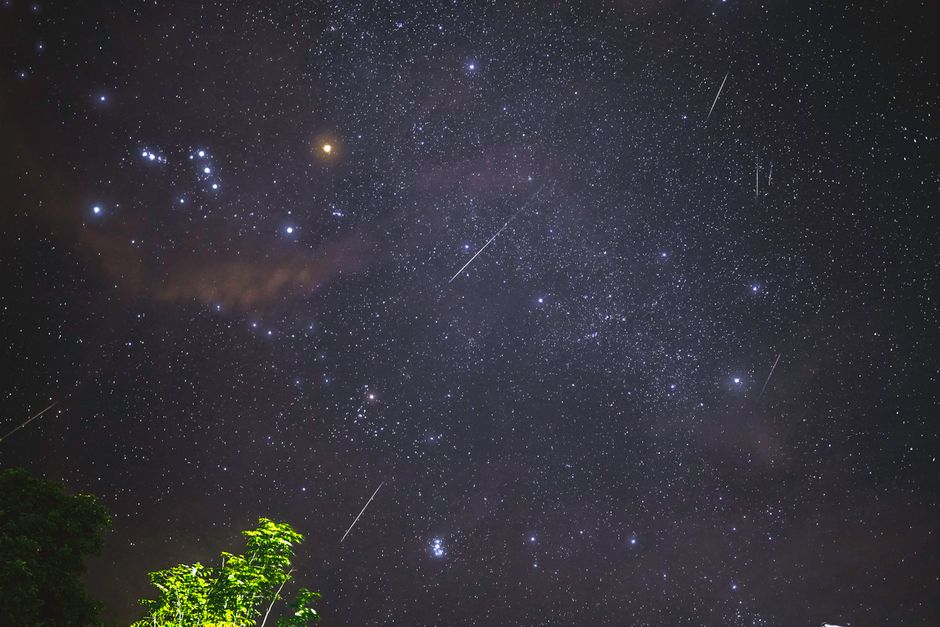
Last August, my daughter dragged her sleeping bag into the backyard at midnight, phone in hand, determined to capture a shooting star. What started as typical teen stubbornness turned into three hours of us lying side-by-side, watching the Perseids paint streaks across the sky. She got her photos—not perfect, but real. More importantly, she put her phone down for two of those hours and just watched.
According to the American Academy of Pediatrics, teens spend an average of seven hours daily on screens, not counting homework. Yet here's the beautiful irony: learning how to photograph meteors without a telescope becomes the perfect gateway to genuine screen-free time under the stars.
The Real Challenge Parents Face
The Real Challenge Parents Face
You want your kids outside, engaged with something real and awe-inspiring. But suggesting they "just go look at stars" lands with all the enthusiasm of volunteering for extra homework. Photography changes everything. Suddenly, they have a mission, a skill to master, and bragging rights for their camera roll. The Perseid meteor shower, peaking mid-August each year, offers the perfect opportunity—up to 100 meteors per hour, warm summer nights, and no specialized equipment required.
Understanding What Makes Meteor Photography Actually Work
Meteor Photography Guide
The magic of meteor photography isn't about expensive gear. It's about knowing how light, timing, and patience work together.
Meteors are space debris burning up in Earth's atmosphere, creating those brilliant streaks we call shooting stars. The Perseids happen when Earth passes through the trail of Comet Swift-Tuttle, and they're famous for being bright, frequent, and beginner-friendly. Your tween or teen doesn't need a telescope because meteors appear across wide sections of sky—sometimes spanning from horizon to horizon.
Here's what actually matters: capturing enough light over enough time. That's it. Whether your teen uses a smartphone, a hand-me-down DSLR, or a basic point-and-shoot, the principle stays the same.
The best viewing happens between midnight and dawn, when your location faces into the debris stream. But don't stress about finding the radiant point in Perseus—meteors appear everywhere. Your teen just needs to point the camera at a dark section of sky and let it drink in the light.
For smartphone meteor photography, the real breakthrough came with night mode and long-exposure apps. Apps like NightCap, Slow Shutter Cam, or even the built-in night mode on newer iPhones let tweens capture 15-30 second exposures. That's long enough to catch a bright Perseid.
Setting Up Your Backyard Meteor Photography Station
The backyard works perfectly—you don't need to drive to a remote mountain. You just need to work with what you have.
First, tackle the light pollution. Turn off your porch lights, close the curtains on bright windows, and give your teen's eyes 20-30 minutes to adjust. This waiting period is actually perfect for teaching basic camera settings without pressure.
For DSLR meteor photography tips, start with manual mode. Set the ISO between 1600-3200 (higher in light-polluted areas), open the aperture as wide as it goes (f/2.8 or lower if possible), and set the shutter speed between 15-25 seconds. Focus on infinity by switching to manual focus and using a distant light or star. Your teen should take a test shot and zoom in to check sharpness.
Camera stability matters more than you'd think. Shooting star photography fails most often because of shake, not wrong settings. A tripod is ideal, but I've seen successful setups using a folding chair, a beanbag on the car hood, even a carefully positioned backpack. One creative teen in my neighborhood wedged her phone in a gap in her deck railing—she captured five meteors that night.
Here's the part that surprises most beginners: you don't watch through the viewfinder. Set up the camera, start the exposure, and step back. Use an intervalometer or your camera's built-in interval timer to take continuous shots every 20-30 seconds. Your teen should actually watch the sky with their own eyes between checking the camera.
This matters because meteor shower camera settings can run automatically while your family actually experiences the shower together. You're not choosing between photography and presence—you get both.
Capturing the Shot: Techniques That Work for Young Photographers
Basic Meteor Photography Techniques
Basic meteor photography techniques come down to three practical strategies: the wide shot, the directional approach, and the patient game.
The Wide Shot
The wide shot means pointing the camera at a large section of sky—maybe 90 degrees up from the horizon. Use the widest lens you have. This maximizes the chance that a meteor will streak through your frame. It's the approach I recommend for tweens and younger teens because success comes quickly, building confidence.
The Directional Approach
The directional approach requires more knowledge but yields more dramatic photos. About two weeks before the peak, have your teen download a stargazing app like SkySafari or Star Walk. They can locate Perseus (the radiant point), then aim their camera about 45 degrees away from it. Meteors appear to radiate outward from Perseus, so this positioning captures longer trails.
The Patient Game
The patient game is exactly what it sounds like. Take 100 shots. Maybe 200. Teach your teen that photograph perseid meteor shower success is a numbers game mixed with persistence. Professional astrophotographers often shoot all night for a handful of keeper images.
Smartphone Photography Tips
For smartphone meteor photography specifically, your tween needs to lock exposure and focus. Tap and hold on a dark area of sky until you see "AE/AF Lock" (iPhone) or similar on Android. This prevents the camera from constantly refocusing on nothing.
One technique that's worked brilliantly for the families I've coached: have your teen include a foreground element. A tree silhouette, your house roof, a tent—something that adds context and scale. It transforms a simple meteor streak into an actual photograph with composition and story.
Essential Preparation
Don't forget the basics of photograph night sky meteors success: dress warmer than you think necessary, bring red flashlights to preserve night vision, pack snacks, and make a playlist for between shots. This isn't just about the photos—it's about creating a memory.
Quick Wins: Start Here
If you're feeling overwhelmed, these five steps get your teen shooting stars this weekend:
Download a long-exposure app (NightCap for iOS, Camera FV-5 for Android) or grab any DSLR with manual controls
Find your darkest view by walking around your property at night—often just moving to the backyard's far corner cuts light pollution significantly
Stabilize the camera on literally anything stable—deck railing, ladder, cooler lid—before investing in a tripod
Getting Started with Meteor Photography
Start with these beginner meteor photography settings: 20-second exposure, ISO 3200, widest aperture available, manual focus at infinity
Take 50 shots over an hour starting at 11 PM on any clear night this week for practice, then hit the Perseid peak (check online for exact dates—usually August 11-13)
Make It Happen
The Perseids come every August like clockwork, and they're genuinely spectacular even for skeptical teenagers who've seen every CGI effect imaginable. Real meteors hitting real atmosphere above your actual backyard hits differently than any screen content.
Your teen might surprise you. Mine started with just wanting a cool Instagram post. She ended up researching comet orbits, learning about camera sensors, and asking if we could drive out to darker skies next year. The photograph shooting stars DSLR challenge became a gateway to genuine astronomy interest.
But even if your tween just gets one decent meteor photo and spends the rest of the night complaining about mosquitoes—that's still a win. That's still three hours away from YouTube, TikTok, and group chats. That's still a shared experience under ancient starlight, doing something humans have marveled at for millennia.
What's holding you back from trying meteor photography with your teen this summer? Maybe it's not knowing which camera settings to start with, or perhaps you're unsure how to keep a tween engaged for multiple hours after dark. Whatever questions or concerns you have, I'd love to help you problem-solve them. Email WizardHQ@AngelinaAllsop.com with your specific situation, and let's figure out how to tailor this meteor-watching adventure to work for your family's unique dynamics and resources.
 Skip to content